
2. Validate Your Children's Feelings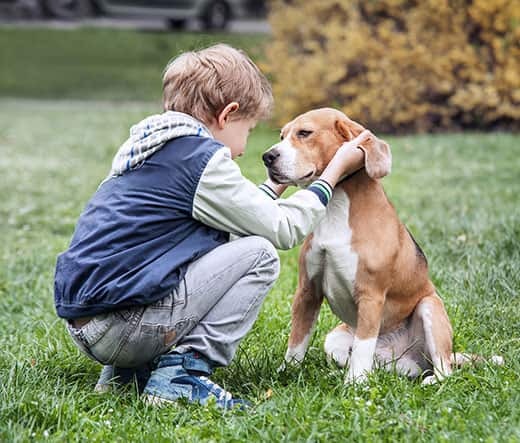
After explaining the death of a pet to a child, be prepared for a wide range of emotions. Your children may shed tears, throw a tantrum or even simply ignore your announcement. All of these feelings and actions are a way of processing the news. Young children are still learning to identify their emotions, and they often look to their parents to validate their feelings. Mourning the loss of a dog is a difficult process, so acknowledge their emotions, regardless of whether you feel the same way. According to the Kübler-Ross model of grief, the five stages people experience are denial, anger, bargaining, depression, and acceptance. To best help your children process the loss, understand what stage they're currently experiencing, and remember that each child may fall into a different stage or progress to the next at different speeds.
In the denial stage, gently remind your children that your dog is no longer living. Be patient when they're angry. Remind your children there's nothing they can do to change the situation if they're in the bargaining situation. Cheer them up when they're feeling sad, depressed and lonely, and always keep your pet's memory alive, even past the stage of acceptance.
One final note: Your emotions may not always align with your children's. Maybe they seem to move on faster than you expected, and much quicker than you seem to be able to. That's OK. Just monitor them over time to make sure they're not bottling their emotions. Similarly, your children may be morose for much longer than you think is necessary. Don't rush them. If you're concerned for their emotional well-being, talk to a counselor about how to help them process their feelings and move past the loss.
An additional note — it's okay for you to go through these range of emotions too. This dog was your pet, so it is OK to feel a hole in your heart that they left when they passed. It's important for you to heal just as much as it is for children. Your kids will look to you, so you will need to be strong for them to help them through this difficult time, but it's not helpful for you to bottle your emotions either. Children are resilient; you might find out that you lean on them to help you through this process more than they lean on you.
3. Celebrate Your Pet's Life
Now that you're done explaining the death of a pet to a child, you may wonder how your family will move on from this sad event. Your dog was so well-loved, and it's going to be tough to live your everyday life without his cheerful demeanor in your home. But, your children will be looking to you as an example of how to proceed with life without the family dog.
One of the best ways to help your children mourn the loss of a dog is to encourage them to celebrate your pup's life. You can do this by sharing stories about the happy moments or silly times you shared as a family. Think of it as a memorial service. Invite grandparents, family friends or even neighborhood dogs. Let your children take part in the planning. They can read a poem or make a collage with pictures of your pet.
Consider making a scrapbook of your dog's life with your children. Start with pictures from that first day you brought him home as a puppy and include pictures of playtime and facts about your pet. For example, an older child could write about how his dog used to love going down the slide in the backyard. A younger child may craft a crayon-scratched family portrait to add to the scrapbook. With this, you and your children will always have a tangible memory of your furry friend.
Another option is to donate your dog's belongings, such as leftover, unopened treats or food, medications, or toys to your veterinarian's office or a local animal shelter. Your pet would be happy to know that his material belongings were helping to take care of or keep another animal happy. Plus, your children will be able to process their grief by helping others. They'll see firsthand the joy they bring to another animal's life, and that may help them move on.
If you're still nervous about explaining the death of a pet to a child, consider asking your vet for help. He or she has a lot of practice talking with families about illness, injuries, and unfortunately, death, and may have some sage advice on how to discuss the loss with your children. Remember that it is a process. You should never try to rush through your emotions as that can only make things worse. Don't go out and adopt another dog if you're truly not ready — even if your kids ask for one. Until you truly are able to process your emotions, another dog may not get the love he deserves.
Contributor Bio

Erin Ollila
Erin Ollila is a pet enthusiast who believes in the power of words and how a message can inform, and even transform its intended audience. Her writing can be found all over the internet and in print. Reach out to her on Twitter @ReinventingErin or learn more about her at http://erinollila.com.