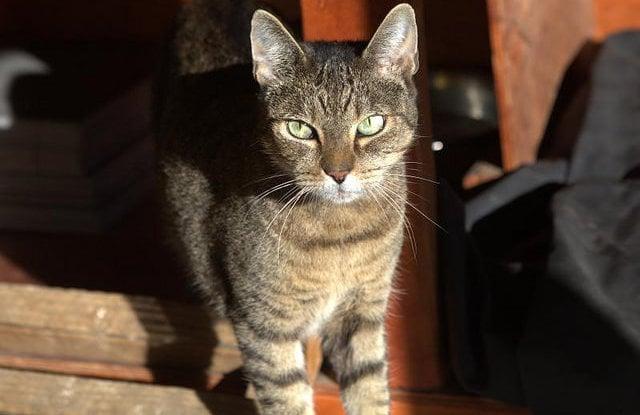
What's your cat doing right now? Napping? Begging for food? Batting around a toy mouse? What happened in the history of cats to transform this once wild creature into a pet so accustomed to the comforts of a domesticated lifestyle?
Millennia of Feline Friends
Until recently, researchers estimated that cat domestication dated back to 9,500 years ago. However, a groundbreaking study published in Science magazine theorizes that the history of cats as companion animals goes back much further, approximately 12,000 years. Scientists analyzed the genetic composition of 79 domesticated cats and their wild ancestors, concluding that contemporary cats descend from the same species: Felis silvestris ("cat of the woods"). Cat domestication occurred in the Middle East in the Fertile Crescent, a region along the Tigris and Euphrates rivers that includes Iraq, Israel and Lebanon.
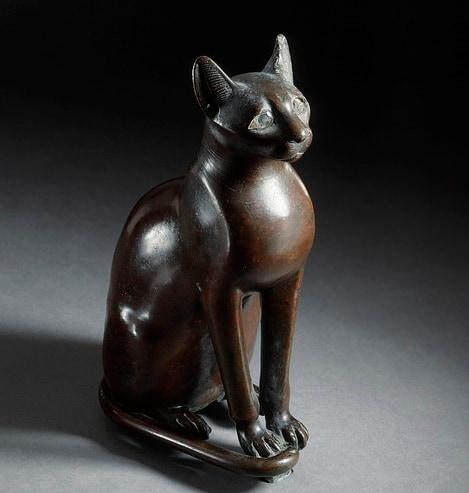
It's well known that some nations worshiped cats for thousands of years and treated them like royalty, such as adorning their pets with expensive necklaces, and even mummifying their kitties when they died. Ancient Egyptians incorporated cats into their worship, most famously the goddess Bastet, who could morph into a cat. Perhaps this is why our furry friends fully expect us to worship them.
The importance of this revised timeline, explains David Zax, writing for Smithsonian, is that it underscores that cats have been helping humans for nearly as long as dogs have, just in a different capacity.
Still-Wild Beasts
As Gwynn Guilford writes in The Atlantic, cat genome expert Wes Warren explains that "cats, unlike dogs, are really only semi-domesticated." According to Warren, cat domestication began in earnest around the same time as people shifted toward a more agricultural society. It was a win-win situation for both sides. Farmers needed cats to shoo rodents out of their storage buildings, and the cats needed a reliable food source from the critters they hunted as well as the rewards given to them by the farmers.
Feed a cat once, and she's your friend forever, right?
Maybe not, Guilford notes. Based on cat genome research, one of the main differences between the domestication of cats and that of dogs is that cats are not entirely dependent on humans for their food. "House cats still have the broadest hearing range among carnivores, which allows them to detect their prey's movement," she writes. "They also retain their night-vision abilities and the ability to digest high-protein, high-fat diets." So, although cats prefer their cat food prepared and served by humans, they know how to go out and hunt dinner if necessary.