
If your kitty is snacking on grass, she could be suffering from tummy troubles, but can cats eat grass when they're feeling just fine? And why do cats eat grass in the first place?
Why Do Cats Eat Grass?
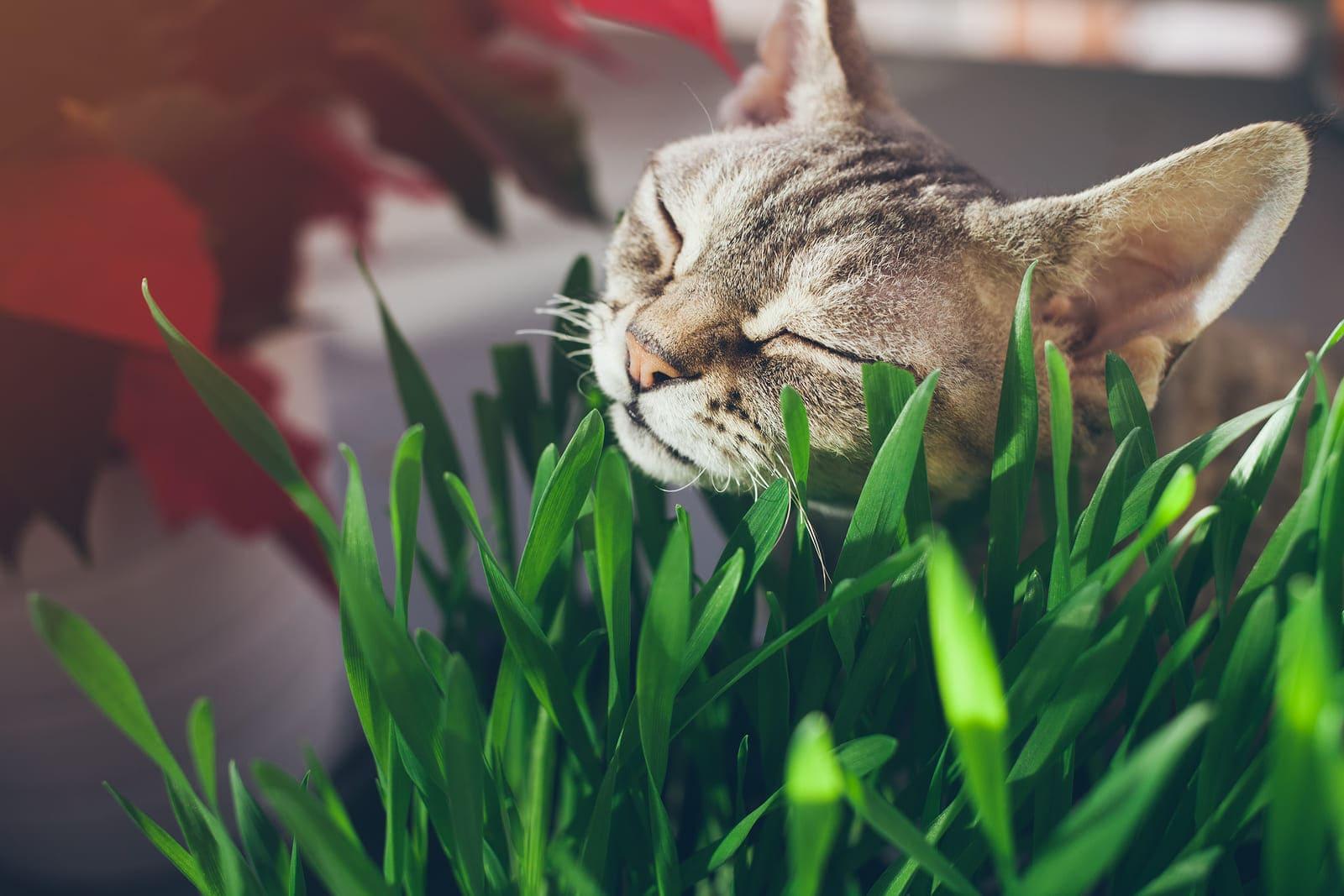
Cats are "obligate carnivores," meaning they require a steady diet of meat to thrive. They don't need a salad with their chicken dinner, and their bodies just don't have the proper enzymes necessary for properly processing vegetation. But, can cats eat grass? The short answer is "yes." Your furry friend might enjoy crunching on some safe greens (more on that later), but choosing the right cat food that provides necessary nutrients is more important than serving up a plate of freshly-cut grass.
As it turns out, cats may munch on grass for some of the same reasons that people incorporate greens into their own diets. Some, like Animal Planet, theorize that cats eat the green stuff because it aids in the removal of non-digestible materials, like fur, assists in relieving constipation, and provides them with nutrients, like folic acid. Chewing on grass or plants also can alleviate stress, according to Vetstreet.
Digestive Needs
Although experts do not refer to grass as being necessary for cats' digestive system, reports Animal Planet, cats may seek out soft blades of grass "to settle their stomachs, much as humans pop an antacid tablet." If your cat overeats or is blocked up, her instinct is to sweep all that out with the fiber found in vegetation. Have you ever noticed your kitty chewing on the toilet paper roll? The need for fiber also motivates this behavior — she's seeking relief, not trying to waste household goods.
Cats require folic acid (vitamin B9) to aid digestion and support cell growth. Kittens get their required dose of folic acid from their mother's milk, but if a cat doesn't get enough of it, notes Animal Planet, she can develop anemia. Because folic acid is present in grass juice, some researchers speculate that cats undertake a quest for grass to supplement this deficiency, but there is no definitive evidence that they do so — and the cats themselves aren't talking. If you suspect that your furry friend is coping with a nutritional deficiency, speak with your veterinarian before trying to treat the issue on your own.
Anxiety
Similar to their pet parents, cats partake in what's called "stress eating" or "emotional eating," causing a kitty to eat not to relieve hunger pangs but to relieve anxiety or to satisfy an oral fixation. When stress hits, she needs an outlet: "A cat that constantly eats grass or plants also may be exhibiting signs of a displacement behavior," says Vetstreet. "Some cats may exhibit over-grooming or excessive vocalization when they are anxious, while other cats may try to engage in a different activity to soothe themselves, such as finding something to chew on." If you notice that your fur baby is chewing on grass or household plants excessively or shows other signs of stress or anxiety, such as withdrawing from family members and displaying aggressive behavior, get in touch with your vet to see how you can help your kitty.